AI is advancing rapidly. Are your processes keeping up?
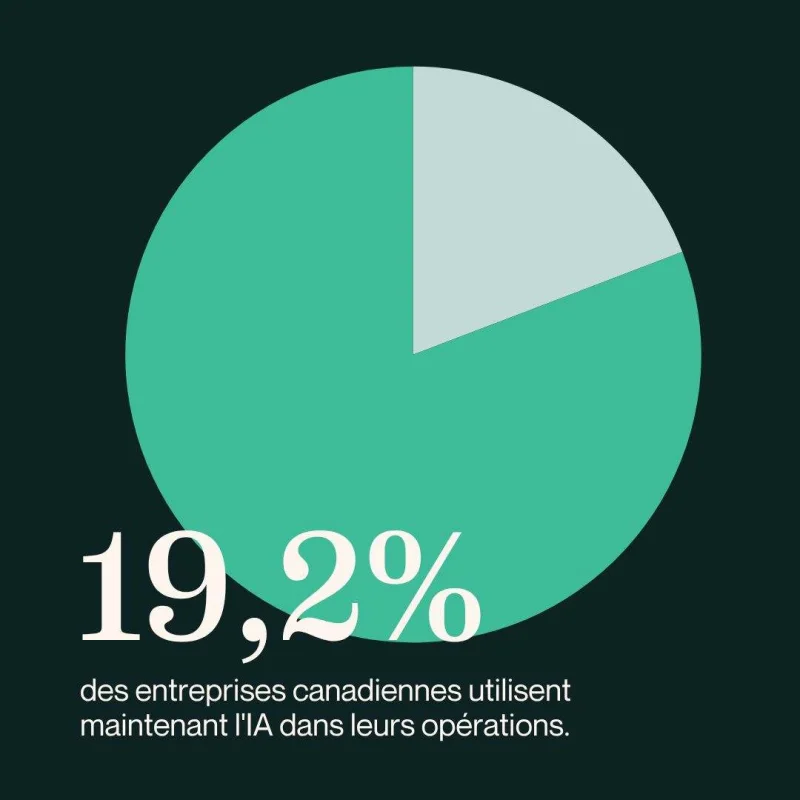
Today, 19.2% (nearly one in five Canadian businesses) are already using artificial intelligence in their operations. This is an impressive milestone, but it raises an essential question: is the operational infrastructure truly ready?
Adopting a new tech tool is often just the first step. To turn initial enthusiasm into measurable value, AI cannot operate in a silo.
The "Formula 1 engine in a rusty frame" trap
Integrating AI without adjusting your processes is a bit like dropping a high-performance engine into a car with a rusted transmission. You might go faster at first, but a breakdown is inevitable.
To create real value, AI must rely on three fundamental pillars:
- Reliable, clean data: AI thrives on data. If your data is incomplete, outdated, or scattered, the outputs generated by AI will be biased or unusable.
- Well-connected systems (Interoperability): An AI tool needs to communicate seamlessly with your existing software (ERP, CRM, project management). Information silos slow down execution speed.
- Scalable processes (Scalability): Your workflows must be formalized and ready to adapt to the accelerated pace imposed by AI.
Takeaway: Without this solid foundation, even the most powerful tools struggle to reach their full potential and risk generating frustration rather than productivity gains.
3 steps to prepare your processes for AI
If your business is part of the 19.2% already using AI (or if you plan to take the leap soon), here is how to ensure your processes keep up:
- Audit your workflows: Identify bottlenecks and repetitive tasks. AI should solve a specific problem, not just become another layer in your daily routine.
- Standardize before you automate: Don't automate a chaotic process. Clean up and clarify the human workflow first.
- Train and support your teams: AI changes the nature of tasks. Change management is crucial for the technology to be adopted with confidence.
In conclusion
Artificial intelligence is an extraordinary driver of growth, but it isn't a magic fix. The key to success lies in the alignment between technology and operational execution.
Check out our LinkedIn post to join the conversation and share your thoughts!
Before investing in the next trendy tool, ask yourself: are your processes truly ready to keep up the pace?